
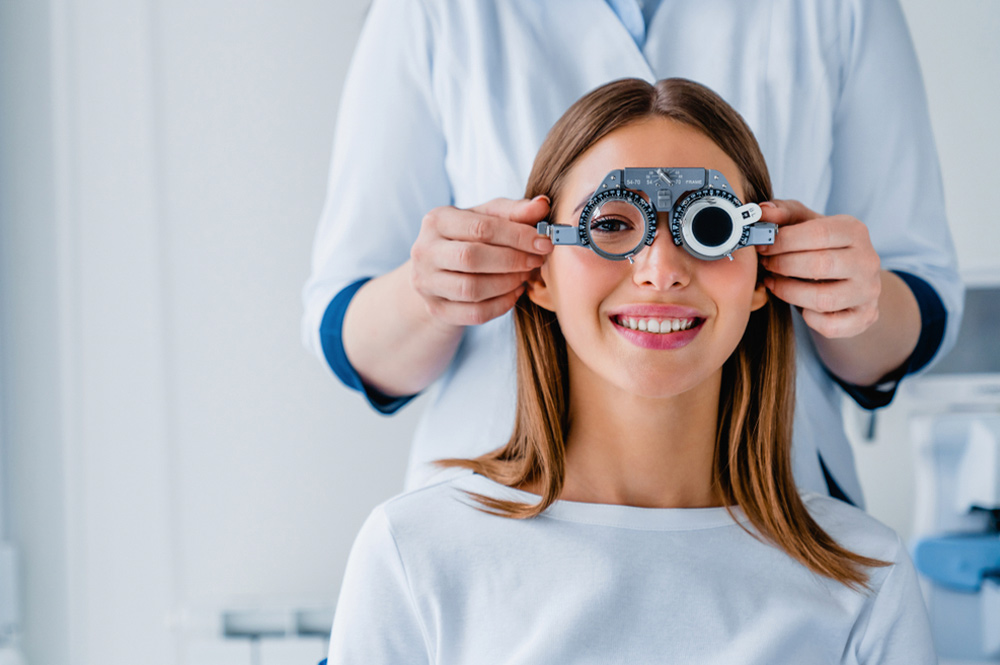

An ophthalmologist is a medical doctor who specializes in eye and vision care and has medical and surgical training. Your initial visit focuses on assessing your eyes’ overall health and identifying any potential issues early; this appointment typically involves a series of tests that evaluate different aspects of your vision and eye structure. Here are some things to expect during your first visit to an ophthalmologist:
Visual Acuity Test
This part of the exam is the standard eye chart reading; the doctor will ask you to read letters or symbols from a chart placed at a specific distance. This test determines how well you see details at various distances compared to a person with normal vision. One eye is covered while the other is tested, which helps isolate the performance of each eye, and it is a common method for determining if you need prescription glasses or contact lenses. The results help the doctor understand the clarity of your sight before completing complex evaluations of your ocular health.
Eye Muscle Test
This evaluation checks the muscles that control eye movement. The ophthalmologist will ask you to follow a moving object, such as a pen or a light, with your eyes while keeping your head still. Observing these movements allows the doctor to look for weakness or poor muscle control.
Good muscle balance is necessary for proper focus and depth perception. If your eyes do not move in unison or if one lags, it suggests an underlying issue with muscle coordination. These movements also help the doctor see if your eyes align properly when viewing objects at different angles; proper alignment prevents strain and double vision in your daily activities.
Peripheral Vision Test
What you see on the edges of your visual field without turning your head is also tested. Loss of peripheral vision is a symptom of various conditions, including:
- Glaucoma
- Retinitis Pigmentosa
- Diabetic Retinopathy
- Retinal Detachment
- Optic Nerve Damage
The doctor may face you and move a finger or hand into your field of view, asking you to signal when you see it. Because you might not notice gradual changes in peripheral vision on your own, this test enables doctors to catch deficits you miss. It acts as a map of your complete visual field, and this highlights any blind spots that require further evaluation.
Dilated Eye Exam
This portion of the visit involves using special drops to widen your pupils. Once the drops are applied, it takes several minutes for your pupils to open fully, allowing the doctor to see into the back of your eye. With the pupil fully dilated, the ophthalmologist examines the retina, optic nerve, and blood vessels located at the back of the eye. This internal view helps detect signs of whole-body diseases, such as diabetes or high blood pressure. The effects of the drops last for several hours, so bringing sunglasses for the journey home is a practical step.
Visit an Ophthalmologist
Regular check-ups help maintain your long-term vision health because they enable doctors to detect conditions before they worsen, preventing vision loss. Some eye doctors are trained to address specific conditions, such as macular degeneration and diabetic eye care. If you have noticed changes in your vision, book an appointment with an ophthalmologist today.