

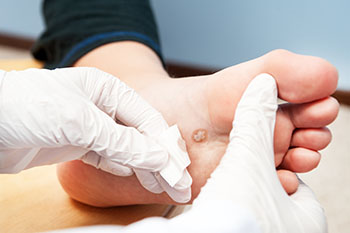

Plantar warts are common growths that appear on the soles of the feet. These warts develop when a virus enters the body through tiny cuts, scrapes, or other weak spots on the feet. Not all contact with the virus results in a wart. The specific strains of HPV that cause plantar warts are not highly contagious, but they do thrive in warm, moist environments. Understanding the nature of these growths, their symptoms, and available treatments can help individuals manage this common foot condition.
What Are Plantar Warts?
Plantar warts are noncancerous skin growths that typically form on the heels or other weight-bearing areas of the feet. This pressure may cause a plantar wart to grow inward beneath a hard, thick layer of skin. The human papillomavirus that causes them is widespread.
Individuals with weakened immune systems may be more susceptible to developing these warts. Children and teenagers are also more prone to plantar warts, possibly because their immune systems are still developing. It may also be because they have more frequent exposure to public areas where the virus can be present.
Walking barefoot in public places where the virus thrives is a significant risk factor. Environments like locker rooms and swimming pool decks are common places for exposure. Having a history of plantar warts also increases the likelihood of future occurrences.
What Are the Symptoms?
The symptoms of plantar warts can vary from person to person. A common sign is a small, fleshy, rough growth on the bottom of the foot. Small black pinpoints are sometimes visible in the center of the wart. These are actually small, clotted blood vessels.
Another frequent symptom is pain or tenderness when walking or standing. Because these warts are located on weight-bearing parts of the foot, the pressure from daily activities can cause discomfort. A callus may form over the wart as it grows inward, which can sometimes make the wart difficult to distinguish from a simple corn or callus. It is also possible for a plantar wart to cause no symptoms at all, particularly if it is small and not on a pressure point.
How Are They Treated?
A podiatrist or other healthcare provider can typically diagnose a plantar wart by examining the lesion. The provider may look for the telltale signs, such as the black pinpoints of clotted blood vessels. The provider may pare down the lesion with a scalpel to see if it bleeds from these pinpoint capillaries, which confirms it is a wart.
Many plantar warts may resolve without treatment. For painful or spreading warts, several treatment options are available. Topical preparations that contain specific acids work by removing layers of the wart a little at a time. A provider may recommend stronger prescription-strength acid treatments.
Another treatment is cryotherapy, which involves applying liquid nitrogen to the wart. The freezing process causes a blister to form around the wart, and the dead tissue sloughs off. This procedure is usually performed in a provider’s office and may require repeat applications.
Meet With a Podiatrist
If a wart becomes painful, changes in appearance, or multiplies, speaking with a podiatrist is a proactive step. A foot specialist can provide a definitive diagnosis and distinguish a plantar wart from other skin conditions. A podiatrist can also offer a range of professional treatments that may be more effective or faster-acting than home remedies, especially for persistent or clustered warts. They can create a personalized treatment plan to address the warts and offer guidance on preventing future infections.
- Tips for Maintaining Spinal Health Through Chiropractic Care
- How to Choose the Right Sports Medicine Specialist for Your Needs
- The Connection Between Hair Loss Treatment and Overall Scalp Health
- What to Expect in a Session with a PTSD Therapist
- Exploring Ingredients and Formulations in White Label Health and Beauty Products